%20(3).jpeg)
Maine Coon Growth Stages: From Kitten to Magnificent Adult
Updated: Sep 9
A Maine Coon kitten can seem to be made almost entirely of ears, paws, and possibility. Then comes the long-legged youngster, with a tail that appears to go on forever and a face that is beginning to lose its baby softness. The mature cat they will become is still taking shape.
That unfolding appearance is part of the pleasure of this breed. A young Maine Coon is not simply a miniature version of the cat they will become, and a first birthday does not necessarily reveal the finished picture.
Understanding Maine Coon growth stages helps you notice those changes, from the earliest portrait to the adult who eventually fills the frame.
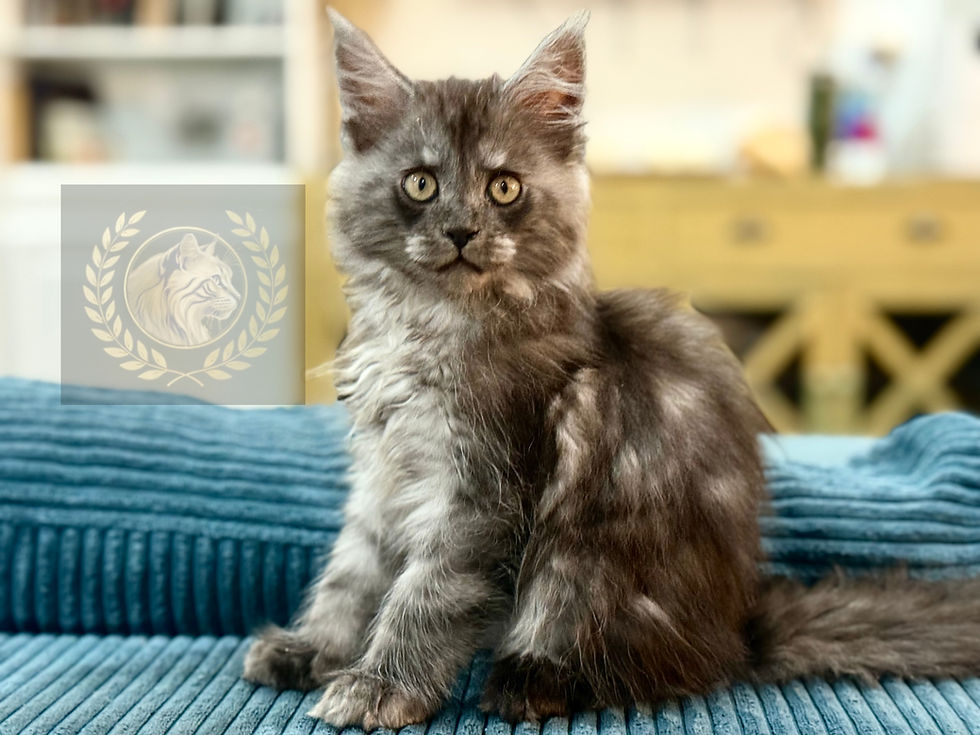
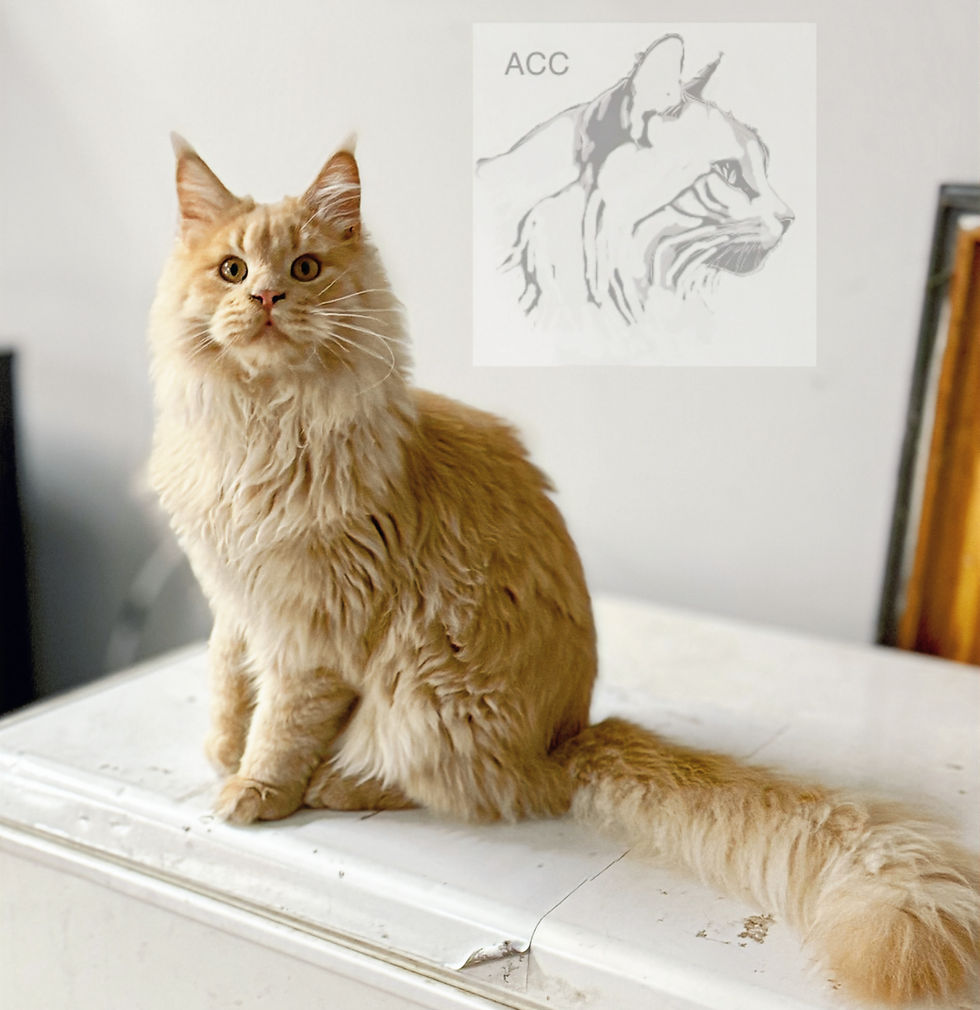
We have included photographs of different cats from our cattery, not a before-and-after sequence of one cat.
Maine Coon Growth Stages Are About More Than Size
“Fully grown” sounds like a single milestone. For Maine Coons, descriptions of maturity involve more than a number on the scale.
The Cat Fanciers’ Association describes a slow-maturing breed that may take around three years to reach full growth. TICA’s breed standard places full maturity at four to five years. Those descriptions are best understood as context for gradual development, not a countdown every kitten must follow.
Body size, muscular development, coat, and the overall adult silhouette do not have to arrive together. Nor does a breed’s late-maturing appearance mean that every bone continues growing until a fifth birthday.
Kittenhood: The Features Arrive Before the Presence
Look closely at a kitten portrait and the eye often goes straight to the ears. With a smaller head beneath them, they can command the entire photograph. Paws and tail may also seem especially prominent beside a young body.
Notice the whole kitten: the outline of the face, the relationship between head and body, and the shape of the tail. The details that dominate an early portrait may make a very different impression as those proportions develop.
The In-Between Stage: Long Lines Before the Finished Outline
A growing Maine Coon may look more elongated than the broad, heavily coated adults that first drew you to the breed. The body can appear long, the neck more visible, and the coat less dramatic. In photographs, that creates a different impression from the rounded softness of early kittenhood.
Think of this as an appearance to observe, not a stage to assign a rigid start and finish date. Some youngsters look substantial early; others show a lighter outline for longer. “Not yet an imposing adult” and “not developing well” are different questions.
For the second question, your veterinarian’s assessment matters more than a comparison photograph. A change in appetite, unexplained weight loss, or concern about growth deserves individual advice—not reassurance based only on the breed’s reputation for slow maturity.

The Ruff Has Its Own Story
The sweeping fur around a mature Maine Coon’s neck can transform the outline of the same face. It is easy to see an adult portrait and expect that framing on a much younger cat.
TICA specifically notes that the frontal ruff, belly coat, and britches become more apparent with age. It also describes differences in neck and ear proportions between younger cats and mature males. These details help explain why adult presence is about more than simply becoming heavier. TICA Maine Coon breed standard.

Two Cats, One Birthday, Different Results
Put two Maine Coons of the same age beside each other and their differences may be as striking as their similarities. One might have a more substantial frame; another may have a coat that creates a fuller outline. Females are generally smaller than males, but sex alone does not tell the whole story of an individual cat.
The breed’s impressive appearance should not turn development into a competition. CFA’s standard emphasizes proportion and balance rather than sacrificing quality for size. A muscular, well-proportioned cat is a different thing from an overweight one. CFA Maine Coon profile and breed standard.
Explore the portraits of our sires and queens to see the individuality within the breed.
Keep a Useful Record of Your Cat’s Growth
Make a small album for your cat and date the photographs. Include a front portrait taken at chest height to show the developing ruff and a relaxed standing side view to show proportions. Use similar angles, distances, and backgrounds when possible so changes are easier to see over time.
A photograph taken close to the face can make the head look unusually large. A cat stretched toward the camera can appear much longer than one curled on a blanket. Even a magnificent coat can hide the outline beneath it. Similar photographs make the changes easier to see without those distractions.
Keep veterinary weight records with the album, but let your veterinarian interpret the numbers alongside body condition. Cornell’s feline nutrition guidance recommends an individual assessment of ideal weight; a large breed does not make excess weight harmless.
The most revealing comparison is often your cat now beside your cat several months ago—not your youngster beside someone else’s fully mature male.
One practical distinction: slow maturation does not automatically mean remaining on kitten food for several years. Ask your veterinarian when to move to an adult diet; appearance alone is not a feeding plan. AAHA age- and breed-specific diet guidance.
There is no need to hurry the transformation. Keep the photographs of the oversized ears, the long-legged months, and the gradually changing face. One day, looking back from the company of a mature cat, those in-between portraits may be the ones you treasure most.
—Natasha, AristoCoon Cattery

Comments